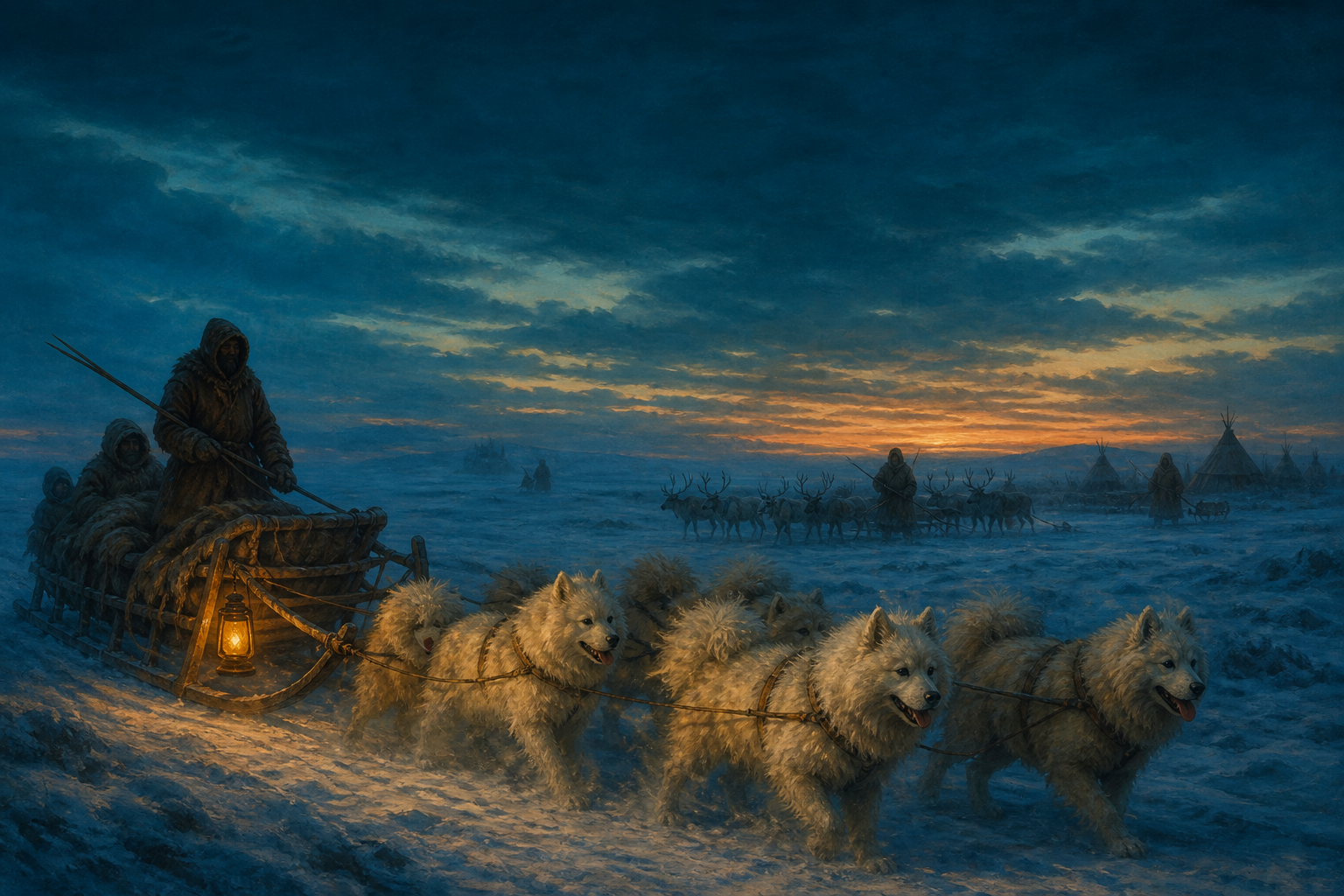
The Samoyed developed among nomadic reindeer herders of northwestern Siberia, where a dog had to be more than a draft animal. The same dog that hauled by day might herd reindeer, watch the camp, and curl up with the family through polar nights — a closeness that shaped the breed's famously people-oriented temperament.
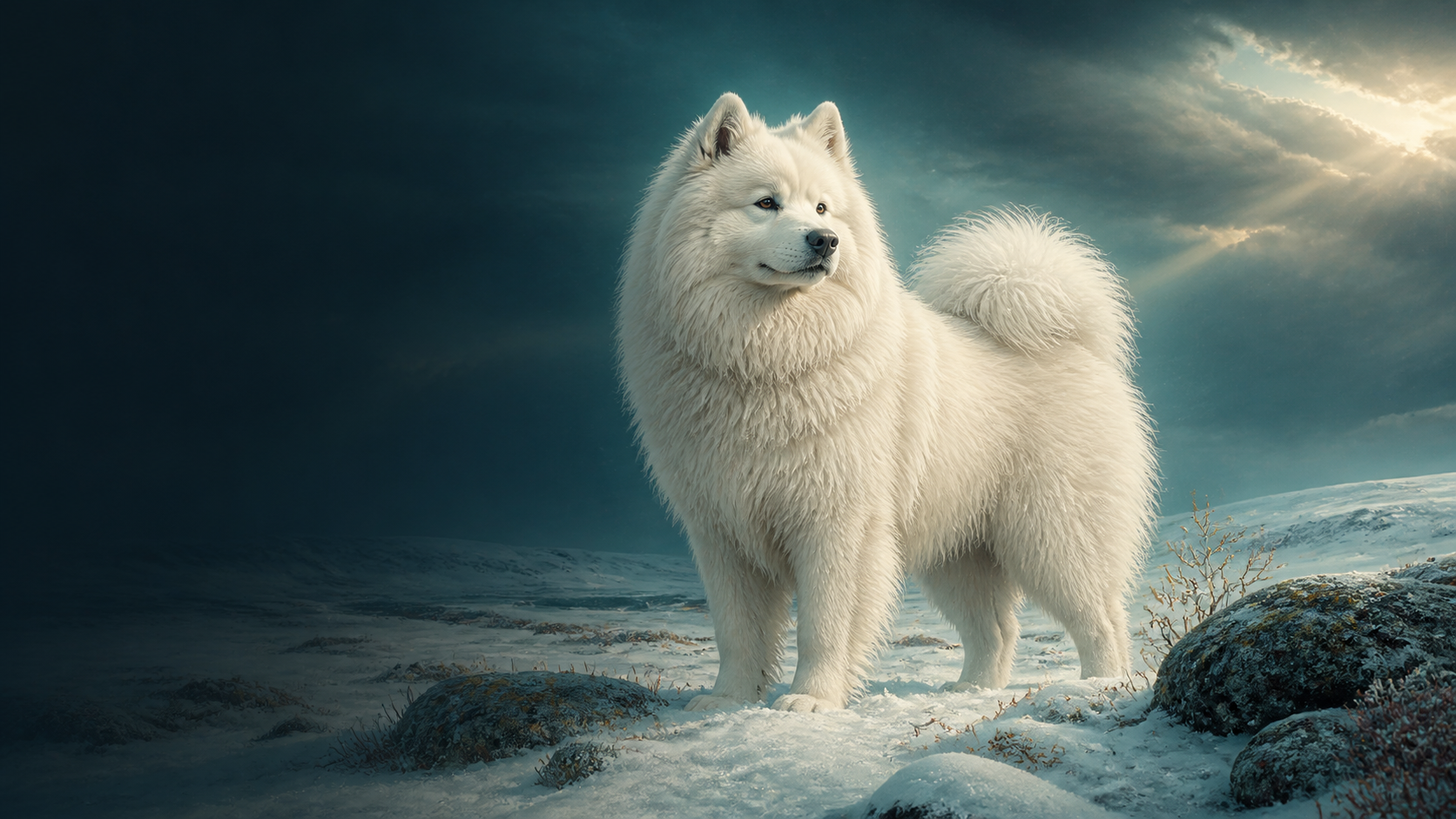
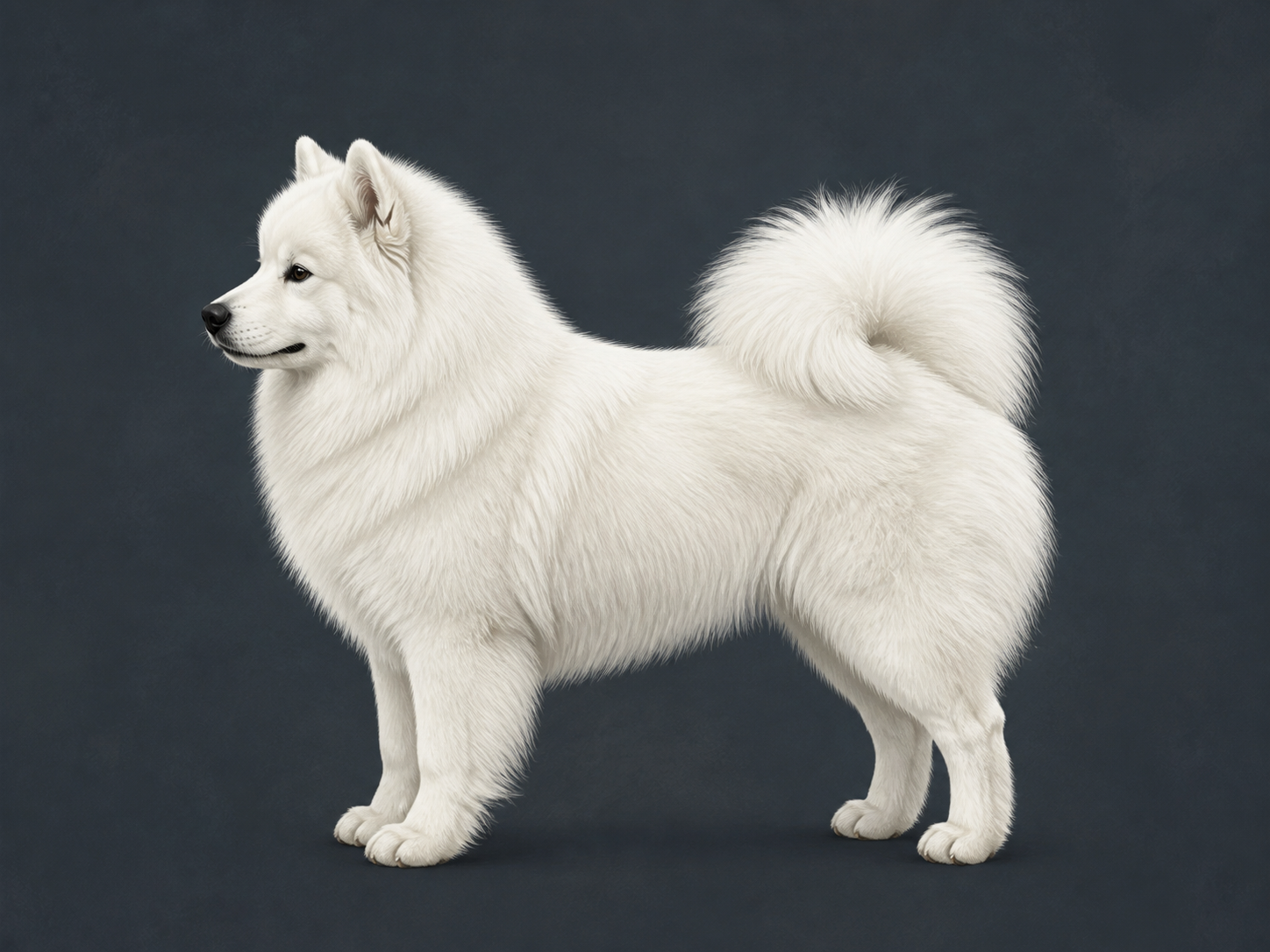
That double life left its mark on the body as well. The dense, weather-shedding double coat, the efficient medium-sized frame, and the upturned corners of the mouth all suit a life spent working in severe cold while staying calm around people and other animals.
Western explorers encountered the breed in the late nineteenth century, when Samoyed dogs were taken on polar expeditions. Stock from those expeditions, and later imports to Britain, helped found the breed as it is known outside Siberia today.
-
Homeland
Northwestern Siberia. Dogs live and work alongside nomadic Samoyedic reindeer herders — hauling, herding, and warming the camp.
-
Late 1800s
Polar expeditions. Explorers take Samoyed-type dogs on Arctic and Antarctic ventures, introducing the breed to the wider world.
-
Early 1900s
The breed abroad. Imports to Britain form the foundation of the modern show and companion Samoyed, and kennel clubs begin registering the breed.
"Part sled dog, part shepherd, part hearth rug — the Samoyed was shaped less by a single job than by a whole way of life."